

Daddy Had Worms

June 2024. The towns were distant, not in miles, but in memories. Hazlehurst, McRae, Baxley, Soperton, Alma, Tifton, and other stops. Dad’s old sales route. I was studying a map preparing for a six-day trek into South Georgia in August. Near Fargo, I would sleep two nights where the road dead-ends in the Suwannee River’s headwaters. You know it as the Okefenokee Swamp.
Among my missions was finding the Bacon County farm where Georgia writer Harry Crews lived as a child. Crews’s life reminds me of my father’s ... hardscrabble and opportunistic ... doing what must be done.
A ghost would accompany me on my drive into Crews country, my father. Together, we would retrace roads familiar. Together we would return to the 1960s. Together, we would ... do nothing.
August 2024. Tropical Storm Debby swept through South Georgia. I had to cancel the trip.
I go back now.
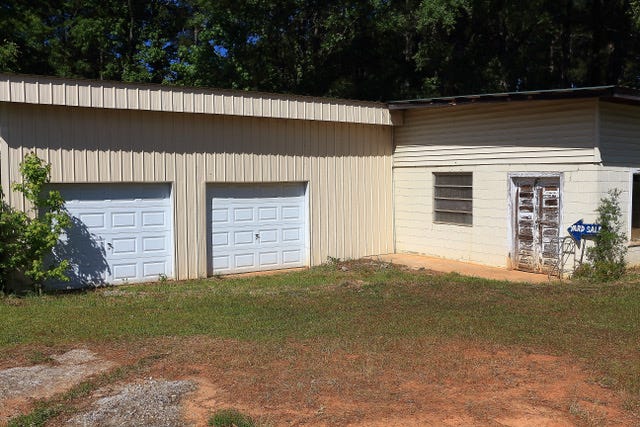
Mid-1950s through the 1960s—In eastern Georgia for years I woke up six mornings out of seven to the snarl of chainsaws. Two hundred yards away in a shop of tin, Daddy sold and fixed saws. They would come back from the Pine Wars covered in gummy black resin with bent bows, dulled chains, fouled plugs, crushed covers, and engines that refused to start. Dad rebuilt bows, sharpened chains, resuscitated engines, and rebuilt saws crushed by trees. Revied, rebuilt, and restored he tested them behind his shop on logs. The saws screamed like some prehistoric leviathan and the noise infiltrated my bedroom window, mind, and memories.
Dad’s shop had no insulation and no air conditioning. During the summer it baked. A fan mounted on a pipe welded to a truck rim swirled the air about, and sweat made dark spots in the armpits of Dad’s blue National Linen shirts. In an oval of white surrounded by red stitching were two words sewn in red: “John Poland.” That shirt had a blue collar. That has never strayed far from my mind.
Dad’s saws felled forests and trucks hauled them to mills. Cradled in upright supports the longest pine sported a red bandana, a warning to vehicles in the truck’s bark-flying wake. Trucks meant money. Dad built the steel supports that cradled pulpwood. I see him now, adjusting the flow of acetylene and oxygen. He pops the flint striker. Poof. A neon-blue plume surges, which he adjusts to a precise blue point. His torch cuts through steel like a knife through butter as showers of molten steel spatter and scatter, a rain of fire.
Acetylene torches and gas make a dangerous combination. It was at Dad’s shop where a man caught on fire. On another day, I watched as Dad welded a steel support on a log truck. He stood there wearing his black welder’s helmet, sparks flying in the blazing sun. Then without warning the bed of planks where he stood gave way and Dad fell through catching his left kneecap on a piece of angle iron. I could not bear to look at him. I thought he would faint. That agonizing injury led to surgery.
As dangerous as they were, chainsaws and welding were the bread and butter of his shop’s trade. The South’s new cash crop, a green monoculture of yellow pines was spreading like wildfire. Pulpwooders in greasy hats, torn overalls, and worn boots brought their dead and dying saws to Dad’s shop where he revived them. He knew all there was to know as chainsaws go, particularly Poulan saws. And that’s why a man in Tifton, Georgia, hired him away from fixing saws to selling saws to dealers.
Late 1960s to Early 1970s—-Dad’s territory was South Georgia. He did not like leaving my mother. It’s a long, sad story that involves mean in-laws and mental health issues. Dad took the job knowing he would get up before daylight and drive south, which he did. He’d get back late at night. Even so he was the top salesman. “I’m John Poland with Poulan chainsaws.” The similarity didn’t hurt.
Years went by without a hitch until Dad’s meager lodging expenses betrayed him. A new sales manager, a dandy in a suit, figured Dad drove home most nights. He would stop that. He added northern Florida to Dad’s territory. Faced with being away three weeks out of four, Dad quit. He was 46 years old. Thus began a struggle of another kind.
I am not one to roll over and play dead when facing a tyrant. One of my strengths is retribution. I never forget someone who inflicts unnecessary pain. If you cross me or someone I love, I won’t forget it. I will turn to voodoo even. I will get you. I asked the fates to rain hellfire on that sales manager, and he paid a price.
Early 1970s to Mid 1990s—Dad returned to repairing saw blades behind his home in a cement block building. He drove a school bus to get decent health insurance through the state. Then he up and got a good case of worms. I don’t know just how Dad got worms. No one is left who knows. All dead. Perhaps nearby Clarks Hill Lake sparked an idea. He would raise worms and sell them to bait shops. Where did he get worms? A catalog is my guess.
He set up wooden bins for red wrigglers along the chain fence across from my mother’s koi pond, a source of joy and torment with its forever-clogging pump. All manner of organic scraps went into the worm beds ... coffee grounds, snips of fruits and vegetables, crushed egg shells, manure, moldy bread, and God knows what. The composted soil looked like devil’s food cake, “debil’s food cake,” as a tongue-tied gal I knew used to say.
Daddy peddled his worms in containers that looked like sour cream cartons. I see him squatting over the ground working ... sifting through the soil and lifting heaps of red worms—spaghetti-like tangles wriggling and, I dare say, worming their way from his clutches. Intent on escape, bound for a watery grave as they were. The koi had tipped them off.
Before the worm plantation’s days, before the sales route days, Dad’s sweltering-freezing shop and its dangerous but honest work fed us, clothed us, and in time helped educate me. Though my saw shop blues gave me a disdain for working with tools, grease, gas, and men, I came to respect blue-collar workers far more than the learned fools (and two-legged worms) fate cast me among as a man. Hard labor is honest work. Being a blowhard isn’t.
As for Daddy, well, he purged himself of the worms. I do not remember why he gave up his worm business but he did. After my mother died, my sisters and I began to get the place ready for sale. One day I pulled up a concrete block from the chain-link fence that enclosed the dog yard. The block had sunk into the soil. A handful of wriggling worms squiggled about when I pulled the block free. I smiled.
To this day, when I see a log truck, smell pine resin, hear a chainsaw whine, or see a bait shop, I am transported to boyhood.
Next summer I intend to go down to Bacon County, Georgia, to see where Harry Crews lived, the man who wrote a line that sticks to me like beggar’s lice.
“Survival is triumph enough.”
Late 1990s to 2000s—Daddy had worms. They helped him survive emotionally. Dad had land and plenty of money. What he needed was a productive way to spend time close by my mother. To be near her. When my father was dying of esophageal cancer, a curse from the Debil, Hiroshima, and years of welding, with a dash of cigarettes thrown in for bad measure, I drove 92 miles home one summer afternoon to pay them a surprise visit. Around 3:30 p.m. I opened the door to the porch and entered the den. No one. Just past the bath I saw my parents asleep on their bed. They were holding hands. Dad could no longer talk. Surgeons had removed his larynx. I went back to my car and wept. I wept hard. Asleep but holding hands. All those years seemed to have taken them and me to that moment of pure love. Not one word necessary.
Dad died November 15, 2003. Mom died March 26, 2015. I’ve not been in the old home since we sold it. If I walk into the back yard and visit the old worm farm, I know I will see red wrigglers. I’ll see a whole lot more. Lives that were and are no more.
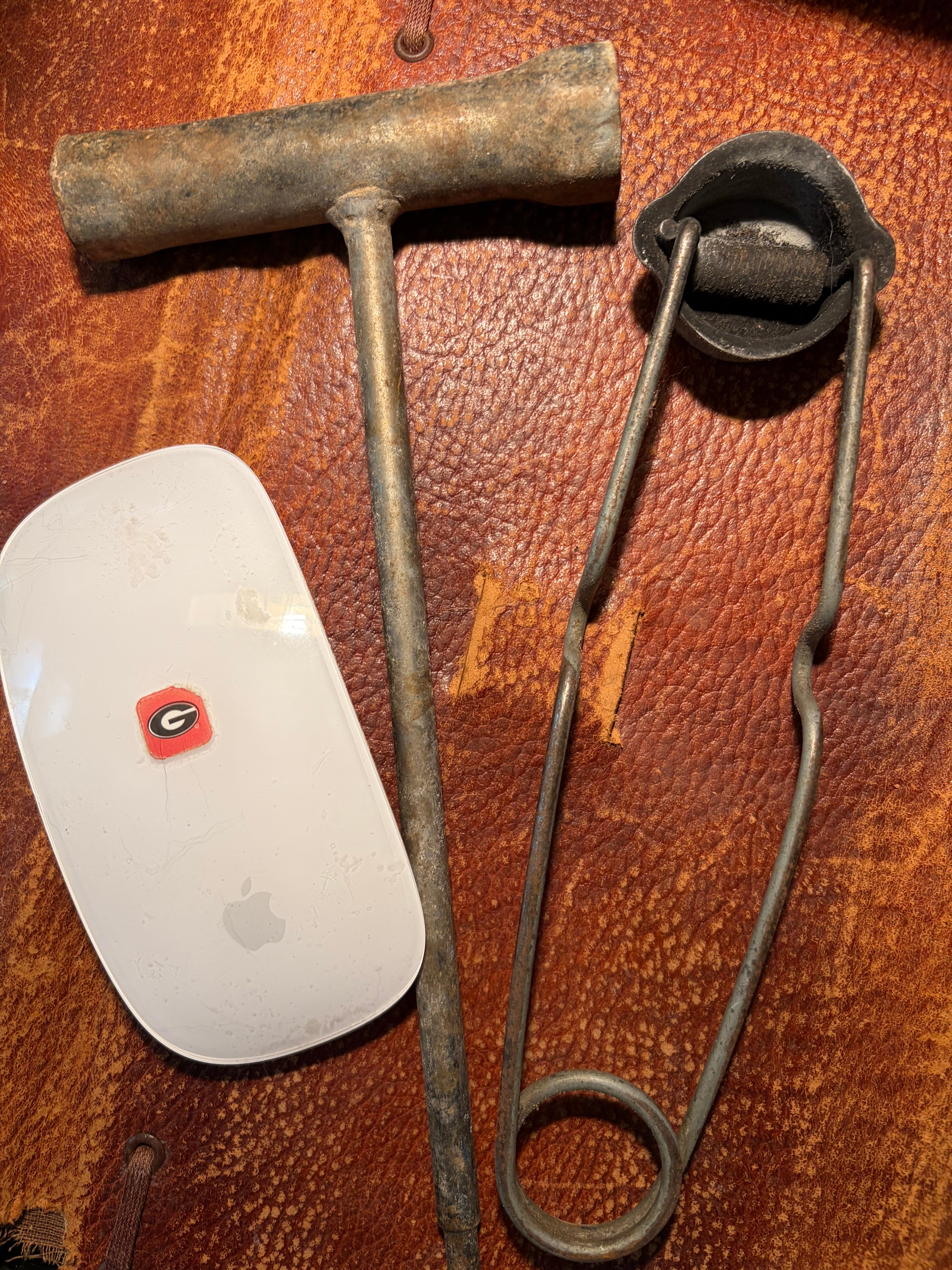
To this day I keep Dad’s old flint striker and plug wrench on my desk. Some days when my imagination struggles, I pop Dad’s flint striker and sparks fly. I see him young and vibrant once again. Then I remember he worked in blazing hot summers and brutally cold winters. Fixing saws in a building of tin. No insulation. No AC. A stove that burnt old tires that smoked up his shop. My circumstances are decidedly better. HVAC. Internet. No sharp edges. No grease. No gas. No fire. Music, art, cold water, clean air, and more.
“No excuses,” I think. “I better get to work,” and generally something falls into place.
Daddy had worms. I have a mouse. We work with what we can to scratch out a living, to provide for those we love. Anything else is a distraction, but you best remember the journey. You best remember all you can if you’re among the last survivors of survivors. Otherwise no one will know. None of it will have happened, though it surely did.
Survival and memories to last a lifetime is triumph enough. Love your comparison worms to mouse to eek out a means of support. A great memory of your parents holding hands to the end great love.
Some stories need to be long and this is one of them. This is a beautiful tribute to a hardworking and honorable man.