

The Dark Corner
1,000 Words—Not Your Ordinary Travelogue

The Dark Corner drops from the North Carolina state line and runs east to the Spartanburg County line, west to U.S. Highway 25, and south to a line connecting Travelers Rest, Tigerville, and Gowensville. Even the preachers there made corn whiskey.
I drove up to find Burrell Shiloh, a moonshiner in the Corner.
“Burrell, tell me about the Corner.”
“See for yourself.”
Shiloh gave me the number of an Appalachian quilter up there. A man of few words he told me no more. Two days later down she comes in a flatbed truck with swirls of white overlaying blue, a heavenly woman in a blue sky cloud of a truck.
She wore the black veil of a widow.
“Follow me.”
We zigzagged through switchbacks. I’d lose sight of her, then spot her going in the opposite direction. We turned onto a gravel road and climbed some more. Green carpeted everything except a wall of granite. The Blue Ridge Escarpment. The Cherokee’s Great Blue Wall, place of the blue smoke.
We got out. She slapped her shorts and spoke through motes of dust.
“I worked in my garden this morning.”
She removed her veil. Pale blonde with platinum hints.
“I’m a widow in the making. I’ll explain later. Right now I’m gonna take you to the bridge.”
We got into her flatbed and drove and drove. She got out and pointed.
“Poinsett Bridge, 1820.”
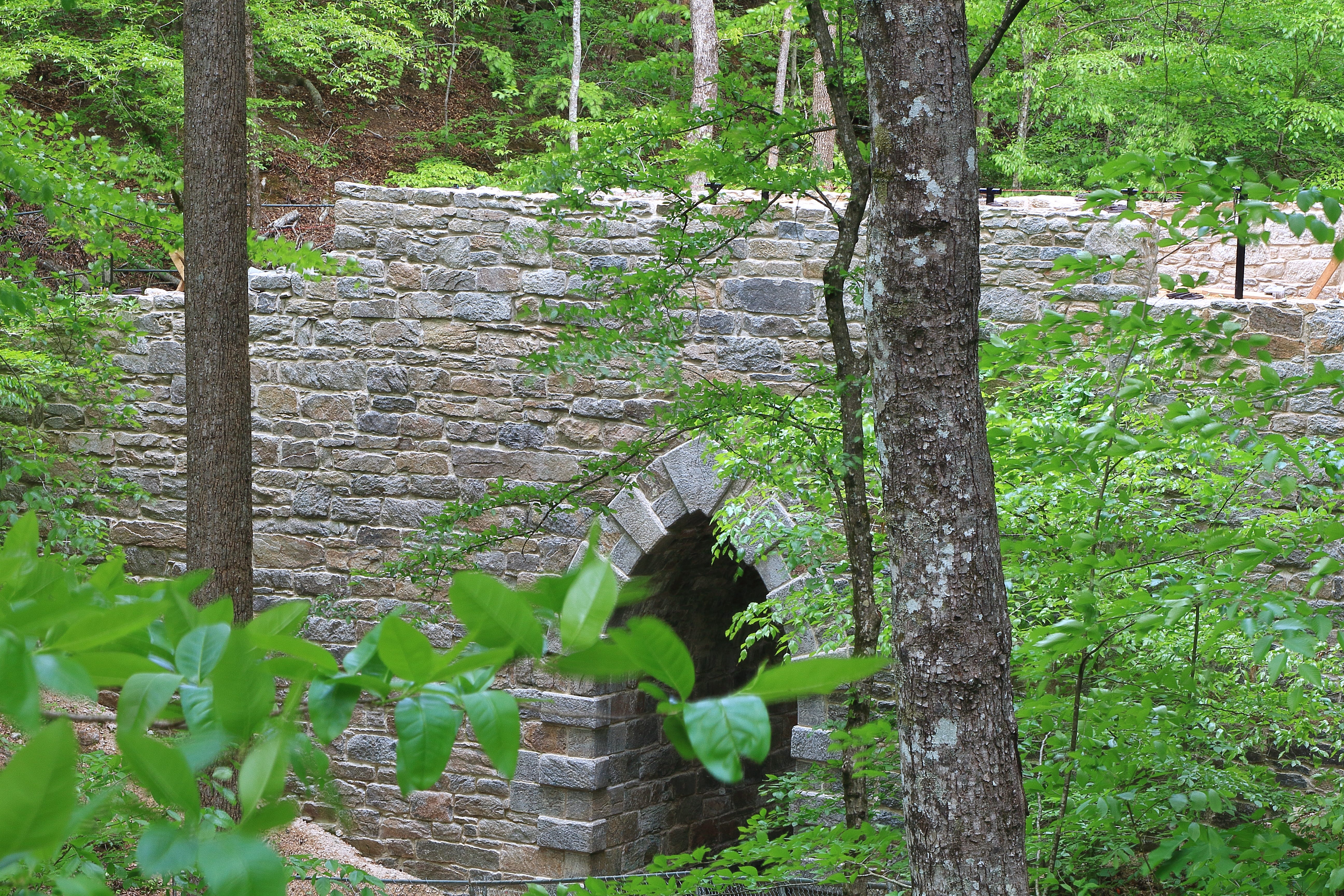
“Looks like the entrance to a fortress.”
“That bridge, lots of dead men walked across those rocks.”
We walked onto the bridge listening to Little Gap Creek run.
“I heard an accident killed three stonemasons and they buried ’em inside the bridge.”
“Not true,” she said. “A while back they reinforced the bridge so it would last 200 more years. Archaeologists found nothing.”
We stayed till after dark. Traded secrets. Her husband was missing in the Dark Corner.
Two days later I left for the flatlands and wrote my feature, but I can’t write about her. Can’t even give you her name. I will say she taught me plenty about the Dark Corner. From the Civil War’s end into the 1920s it was a place best avoided. Killings, vanishings, moonshining, a place where Yankee and Reb deserters preyed on others, locals who didn’t see eye to eye, tax rebels—all that and a cross-eyed view of outsiders made the Dark Corner a place to avoid.
And what of this name, Dark Corner? The story goes that in 1832 John C. Calhoun said the “bright light of nullification will never shine in that dark corner,” referring to the residents’ refusal to support secessionist policies. The light first began to pale when pale faces stole Cherokee land.
It was as if the Dark Corner didn’t exist. No one lived in it. A woman would stand flatfooted in her yard and swear the Dark Corner began across the road. The Dark Corner was always elsewhere. Over yonder, up the road, back a ways. Somewhere else.
I know where it is and I go back. Today the region remains rugged with inaccessible places. You’ll find yourself in the Dark Corner if you visit Campbell’s Bridge. The first time I saw that covered bridge was late afternoon. The sunlight came in so low it turned everything golden and lustrous. A bit blinded, as I rounded a curve my eyes adjusted—Campbell’s Covered Bridge.
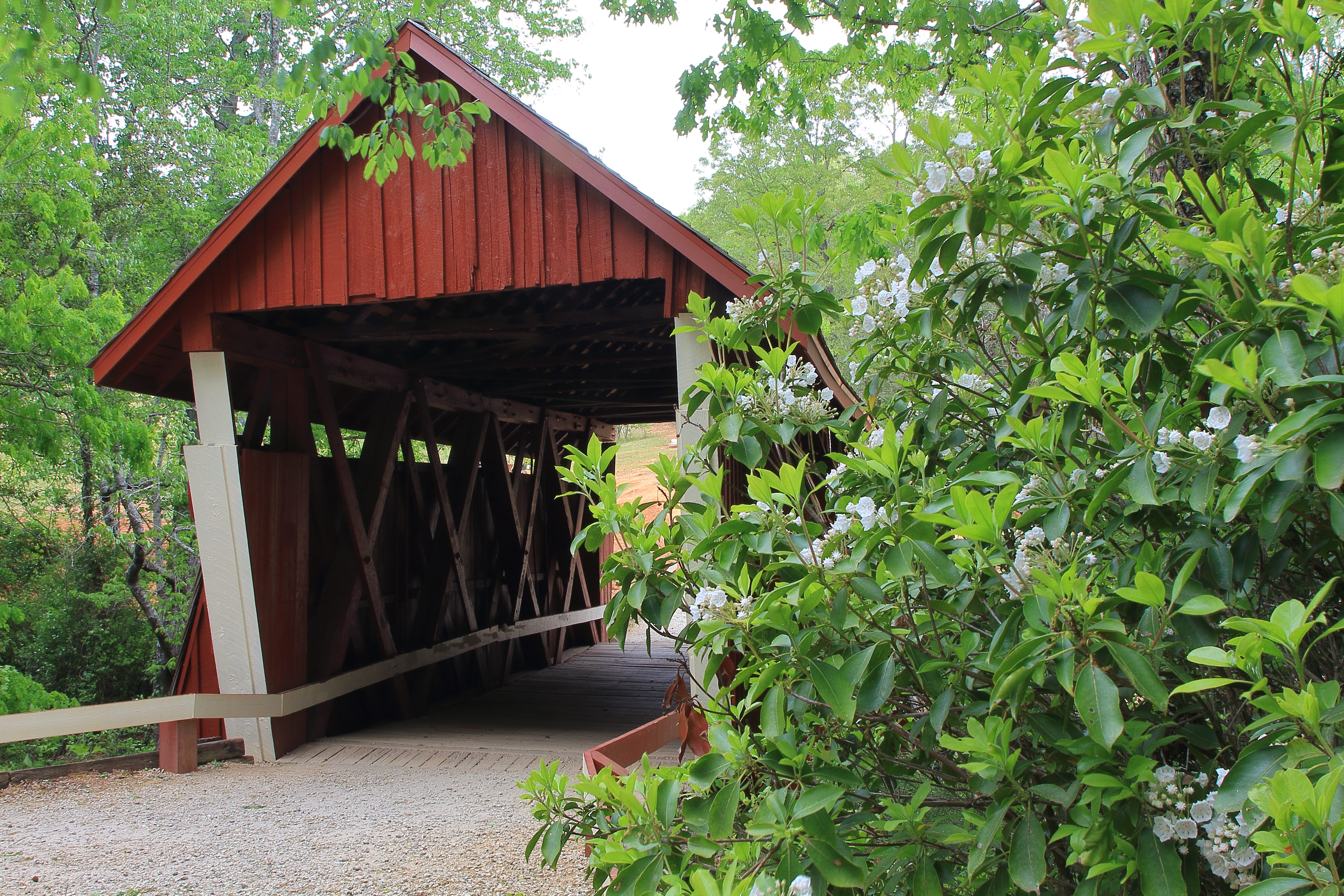
I tarried a bit. Went down to the water. And then I drove to Poinsett Bridge. I felt right at home, except she wasn’t there, but moonshine was. It runs through my blood. My forever-cussing granddad was eighteen when Prohibition arrived. During those years of parched throats he perfected his moonshine, “the best liquor in the county” as one farmhand told me. He parlayed corn liquor into land. Otherwise, I know little about the man except one tale that made it through the family censor—my mother.
Granddad and his charismatic brother, Thomas Carey, “Carey,” who sashayed around with two women on his arm, ran a still by the Savannah River. Maybe they kept the still in one spot too long. Maybe a jealous fellow ratted Carey out. Perchance revenuers saw smoke. However they found it, they raided Grandad’s still while he worked it. Granddad broke and ran through briars and brambles, through thorns and thickets, through woods, and over barbed wire and when he could run no more and had lost every stitch of clothing, they caught him. The agents escorted him home, naked as the proverbial jaybird, where my grandmother met them on the front porch.
With an agent on each elbow, Granddad spoke. “I’m going to Augusta for a few days to do some business with these gentlemen. I’ll be back.”
I like to think Carey loved my grandfather very much, and I will write here that he did. Hearing of his brother’s plight, he gathered up some farmhands and put the still, barrels, and Mason jars on a barge. They poled it to the middle of the Savannah River and sunk the evidence in the ooze gluing two states together. The revenuers freed Granddad.
The next time I go to the Dark Corner I’ll go to Poinsett Bridge around Christmas and imagine that gray stone bridge festooned with poinsettias. I’ll imagine moonshiners crossing it with contraband back when a man could make $6.00 off three gallons of corn whiskey from a bushel of corn that sold for sixty cents. I’ll sip some shine remember Granddad.
Visit the Corner. See the bridge named for Charlestonian Joel Roberts Poinsett who brought the poinsettia from Mexico. Walk in the footsteps of moonshiners. Maybe you’ll come across an old still. Maybe something sinister. Stay into the evening. Listen for the whip-poor-will and its song of desolation. Maybe you’ll hear a dulcimer chiming like carillon bells and see a woman in a blue sky cloud of a truck playing what her Daddy called a hog fiddle. Maybe, like her, you’ll disappear.
A mysterious title followed by an intriguing read! We really enjoyed your story about these bridges, which includes these two, in one of our past fall issues.
What a great story from the Dark Corner! Especially, about your Grandad!